Cadify Library
This page explains, in simple terms, how Cadify keeps library files synchronized between the local machine and Cadify Cloud, what is required for synchronization to run, and basic user guidance.
What Cadify Library Sync does
- Keeps files and folders in the local Cadify library folder in sync with the Cadify library stored in Cadify Cloud.
- Sync is two way:
- Files and folders added or changed locally are uploaded to Cadify Cloud.
- Files and folders added or changed on Cadify Cloud are downloaded to the local library.
- Folder structure is preserved. Files are compared by content, so unchanged files are not re uploaded.
Dropbox Account and Beta Context
Cadify Cloud currently operates using a Dropbox Plus subscription held by KODE15 AS. The platform is in closed beta, privately financed, with invited beta customers only, and no commercial deployment. All storage and synchronization are used solely for internal development and testing activities. End users do not connect their own Dropbox accounts.
Within this non-commercial context, the use of Dropbox Plus is proportionate and aligned with Dropbox’s consumer terms. This setup supports validation and development only. Prior to any commercial launch or onboarding of paying customers, Cadify will transition to an appropriate Dropbox Business subscription and comply with applicable Dropbox Developer and Business agreements.
Where files live in Cadify Cloud
Cadify connects the local library for each nopCommerce store to a matching Cadify Cloud client workspace.
- Each store gets its own client workspace.
- The workspace's name is based on the store name or URL.
Example:
- Store:
cadify.gratis - Cadify Cloud workspace:
Apps\Cadify.Gratis\Library\ - Local folder:
C:\Cadify\Library\Cadify.Gratis\
Inside that app folder, Cadify expects the same library structure as on the local machine (for example cadify textures, weldments, parts, and any subfolders you create).
This mapping is fixed per store. If you log into another store, Cadify uses a different app folder under Apps.
When synchronization runs (must read)
Automatic synchronization runs only while one of the following is active on the computer:
- SolidWorks is running with the Cadify AddIn installed, or
- The Cadify Service is running, or
- Excel is open with the Cadify Task Pane active (Cadify installed and Task Pane open)
If none of these are active, automatic sync will not occur. To force sync, start any one of these applications or components.
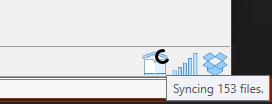
On status bar you can see the state of syncing.

How local changes are handled
- Cadify watches the local library folder for file and folder events: create, change, rename, delete.
- When a file is created or changed, Cadify computes a content hash and uploads the file to Cadify Cloud if the content is new or changed.
- When a file or folder is renamed or deleted locally, Cadify updates the cloud copy in the app folder accordingly.
- Temporary OS or editor files (paths containing
~) are ignored to avoid uploading incomplete files.
How Cadify Cloud changes are handled
- Cadify keeps a continuous connection to Cadify Cloud. When Cadify Cloud reports changes in the relevant app folder, those updates are applied to the local library.
- On startup Cadify performs an initial sync and downloads files that are new or newer than the local copy.
Base folders created at installation
During installation Cadify creates three base folders inside the local library root:
cadify textures– contains SolidWorks appearance, texture, and color files.weldments– contains SolidWorks weldment profile files (profiles used by the Weldment tool).parts– general parts folder for CAD part files.
Important: cadify textures and weldments are special folders used by SolidWorks for specific file types and must not be renamed. Renaming them can break SolidWorks ability to find those resources.
The same folder names and structure are mirrored under the store specific Cadify Cloud workspace, for example:
- Local:
C:\Cadify\Library\Store.Name\cadify textures - Cadify Cloud:
Apps\Cadify.Gratis\cadify textures
Common tasks and workflows
- To add textures or weldment profiles, place the files into
cadify texturesorweldments. If sync is active, the files will be uploaded to the Cadify Cloud workspace and distributed to other machines. - To add parts, place files into
parts(or subfolders). These will sync like any other files. - To force a sync, open SolidWorks (with Cadify AddIn), or start the Cadify Service, or open Excel with the Cadify Task Pane.
Troubleshooting (quick checks)
- Ensure one of the required sync agents is running (SolidWorks with Cadify AddIn, Cadify Service, or Excel Task Pane).
- Confirm internet connectivity.
- Verify the local Cadify library path exists and is accessible.
- Avoid editing the same file simultaneously on multiple machines, this reduces conflicts.
- If files do not appear, restart SolidWorks, Excel with the Task Pane, or the Cadify Service to trigger the sync agent.
Best practices
- Do not rename
cadify texturesorweldments. - Add resources (textures, weldment profiles) to the appropriate folder so SolidWorks can use them without extra path configuration.
- Allow a short time for sync to complete after adding or changing files. Uploads and downloads happen automatically but may take a moment.
- Keep a clear store to folder mapping, for example:
cadify.gratis→Apps\Cadify.Gratis\Library\store.example.com→Apps\Store.Example.Com\Library\
For additional assistance or details about Cadify behavior, consult the help pages provided with the installation or contact the administrator managing the Cadify Cloud store.